Admin notice: Since 2026 media outlets have to be created as post type with category "media".
Rendering will take place via shortcode below.
Lessons for Nuclear Proliferation from the Myth of Orpheus
by Leonardo Bandarra, published on ECPR The Loop
June 2026
The 2026 Review Conference of the Treaty on the Non-Proliferation of Nuclear Weapons (NPT) ended without a consensus outcome, extending a period of deadlock that has now lasted more than sixteen years. Yet the central challenge facing the treaty may not be the failure of the treaty itself, but a gradual erosion of confidence in the processes that allow states to manage uncertainty and sustain cooperation.
Drawing on the myth of Orpheus and Eurydice, Leonardo Bandarra reflects on the role of trust, uncertainty, and verification in nuclear politics. At a time of renewed geopolitical tensions, nuclear modernisation, and persistent disagreements over disarmament, the article asks what happens when confidence in multilateral frameworks begins to erode—and what can be done to strengthen it.
When the Cornerstone Cracks: the NPT and the Future of the Global Nuclear Order
by Leonardo Bandarra & Carmen Wunderlich, published on European Leadership Network
June 2026
Sixteen years after the last agreed outcome in the NPT review process, repeated deadlocks have become a defining feature of the review cycle. Over time, this pattern has gone hand in hand with a gradual shift: issues that prove difficult to resolve within the NPT framework are increasingly being taken up in other processes and institutional settings. As these dynamics unfold, the NPT review process remains central, but no longer exclusive, to how questions of nuclear governance are addressed — a development that adds further complexity to a system already marked by persistent challenges to consensus.
No Consensus, Again: The NPT between Procedural Innovation and Old Political Deadlocks
by Leonardo Bandarra, published on Pressenza
May 2026
The Eleventh Review Conference of the Treaty on the Non-Proliferation of Nuclear Weapons (NPT) concluded without a consensus outcome document, continuing a pattern of deadlock that has persisted for already 16 years. While the NPT remains one of the most widely adhered-to security treaties and has played a central role in preventing nuclear proliferation, progress on disarmament and agreement among States Parties have proven far more difficult to achieve.
Against this backdrop, the 2026 Review Conference combined procedural innovation with familiar political divisions. New approaches to drafting and negotiation sought to facilitate consensus, but disagreements over compliance, disarmament, regional security, and the future of the review process ultimately prevailed.
European perspectives on the Non-Proliferation Treaty: Germany
by Carmen Wunderlich, published on European Leadership Network
March 2026
Germany still sees the Nuclear Non-Proliferation Treaty (NPT) as the cornerstone of global nuclear order, but today’s geopolitical tensions – from Russia’s war in Ukraine to rising proliferation risks – are testing its credibility. As the 2026 NPT Review Conference approaches, “Berlin presents itself as a mediator between nuclear‑weapon states and disarmament‑oriented actors, stressing that deterrence, non‑proliferation, and disarmament are mutually reinforcing rather than contradictory” (Wunderlich 2026). Yet this role is increasingly challenged by shifting security priorities, alliance politics, and questions about whether Germany can truly reconcile its commitment to multilateral arms control with a harsher strategic reality.
by Robin E. Möser, published in The New Internationalist
December 2025
What can be learned from South Africa, the first and only case where a nuclear arsenal has been developed and dismantled? In his recently published article in The New Internationalist Robin Möser lays out how „the racially segregated nation came to build nuclear bombs in the first place, and what can be learned from its unprecedented step of giving them up“ (2025, p. 38).
In September 1989 and the following two years, newly elected President FW de Klerk introduced several political reforms, one of which was to resolve the „government’s ambiguity about the status of its nuclear capabilities“, to dismantling the nuclear devices and to join the Treaty on the Non-Proliferation of Nuclear Weapons (NPT) by 1991. IAEA’s verification mission started shortly after.
South Africa’s case shows that, apart from moral conviction, domestic political preconditions, paired with a conducively perceived international context, are required for abandoning nuclear weapons: „[C]ontinuing to possess nuclear weapons under the radar would have undermined the new South Africa’s international legitimacy and barred it from legally joining the NPT“ (Möser 2025, p. 39). A second key lesson addresses that non-proliferation in a country sanctioned for various issues can hardly be achieved by reassuring relief of sanctions.
The outlined efforts can be considered a contribution to the global identity of South Africa, moving „from isolation to influence, helping secure the indefinite extension of the NPT in 1995, and emerging as a persuasive moral voice on disarmament. The country used its ‘disarmament dividend’ to bridge divides between nuclear and non-nuclear states“ (Möser 2025, p. 40).
☢️ Africa’s disarmament experience holds lessons for a stalled nuclear debate
by Robin E. Möser, published in The Loop
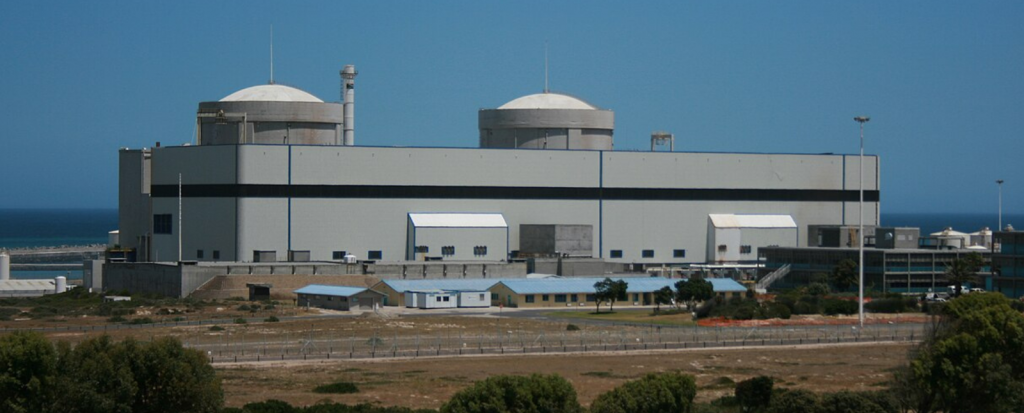
Koeberg Nuclear Power Station. Credit: Philipp P Egli. Wikimedia Commons. CC BY 3.0.
November 28, 2025
African states have long championed nuclear disarmament, from resisting colonial-era testing to advancing the Pelindaba and Prohibition Treaties. Yet frustration is growing over the slow pace of progress and exclusion from global forums. Robin E. Möser argues that African experiences offer lessons to revitalise inclusivity ahead of the 2026 Non-Proliferation of Nuclear Weapons (NPT) Review Conference.
Despite often being sidelined, African countries have been active in the global nuclear disarmament debate for many decades. The current picture is far removed from earlier scenarios that relegated countries of the Global South to mere observers of Cold War nuclear rivalry between the US and the USSR. Enormous support for the 2021 Treaty on the Prohibition of Nuclear Weapons (TPNW) across the African continent made this abundantly clear.
Yet recently, the once-unwavering support of many African states has shown signs of strain. Strategic geopolitical interdependencies and economic factors related to energy security underpin this trend. African civil-society actors continue to feel marginalised, far from equal participants in shaping global nuclear policy.
African civil-society actors continue to feel marginalised; non-African voices dominate the international diplomatic environment
The growing sentiment is that African voices are not getting a fair hearing compared with those dominating the discussions. African actors are becoming increasingly disillusioned with the non-inclusiveness of the diplomatic environment tasked with governing international nuclear issues. How, then, can we widen the debate and give room to more diverse voices?
Lack of inclusiveness in the nuclear policy world
In recent years, the global debate on nuclear disarmament has, rightly, broadened. It has now begun to pay attention to voices that had long gone unheard. In the wake of the TPNW’s emergence, some of the most vibrant and dynamic support came from African civil society. Yet African perspectives — and those from the Global South more generally — remain underrepresented in global nuclear policy discussions.
For a working paper, I interviewed African civil-society actors about their views on inclusivity and permeability in current global nuclear disarmament debates. My colleague Michal Onderčo and I identified three persistent barriers for African participants: restrictive Western visa policies; the debate’s exclusionary expert language; and a lack of funding to attend overseas conferences and forums. The latter includes the costs of visa applications, not to mention the long waiting times for a US visa for African applicants.
Restrictive Western visa policies, technical jargon, and a lack of funding to attend overseas conferences all create barriers for African civil-society actors to participate in international nuclear debate
An immediate remedy would be to host diplomatic events in more accessible locations such as Addis Ababa and Nairobi (a UN city). Other initiatives could include simplifying technical jargon; and providing financial support to enhance inclusivity.
From disarmament advocacy to nuclear-energy policy, Africans bring unique and valuable perspectives. Amplifying African voices could help reverse the growing dissatisfaction within the Global South over the non-inclusiveness of international discussions, and foster a more equitable dialogue on nuclear disarmament.
African examples
Several key developments stand out for their policy relevance. The African Nuclear-Weapon-Free Zone Treaty – commonly known as the Pelindaba Treaty – marked a milestone in making the African continent free of nuclear weapons. Ratification took more than a decade and was completed only in 2009. Despite this, the Treaty has held firmly for nearly two decades, reaffirming a continent-wide commitment to a nuclear-weapon-free world. Moreover, its legal framework provides novel ideas and policy mechanisms whose significance merits far greater recognition.
Two points are particularly noteworthy. First, all states adhering to the Treaty agreed to forgo the stationing of nuclear explosive devices anywhere on the continent, let alone acquiring them (a prohibition echoed in other agreements). This is not the norm in other world regions, such as Europe. In light of the TPNW and future disarmament obligations, including verification, the Pelindaba model could offer valuable legal leverage.
The Pelindaba Treaty has held firmly for nearly two decades, reaffirming a continent-wide commitment to a nuclear-weapon-free world
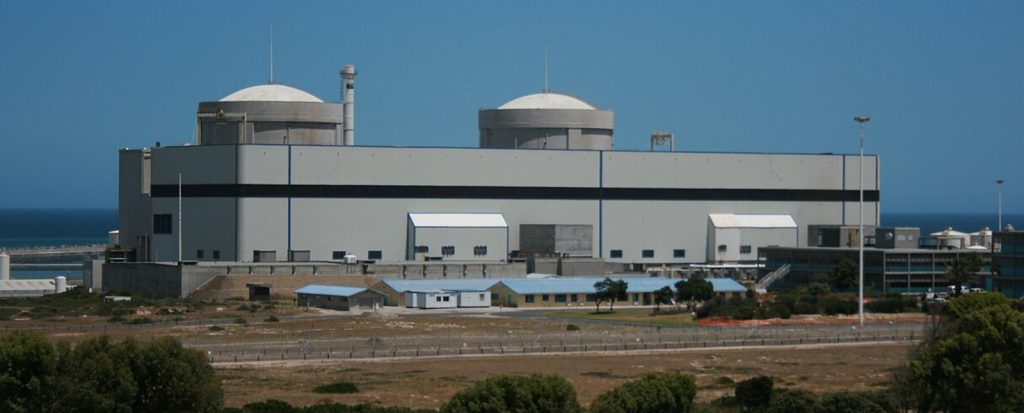
Second, unlike the 1968 Treaty on the Non-Proliferation of Nuclear Weapons (NPT), the Pelindaba Treaty explicitly outlaws attacks on nuclear installations. This includes nuclear research infrastructure and power reactors. At present, Africa has only one operational nuclear power plant — the Koeberg facility near Cape Town. Egypt is building another, and several countries, including Ghana, Kenya, and Nigeria, are exploring nuclear-energy development.
Koeberg Nuclear Power Station. Credit: Philipp P Egli. Wikimedia Commons. CC BY 3.0.
The potential risks are clear. In recent years, Ukraine’s Zaporizhzhia power plant has been drawn into the ongoing conflict with Russia. Iran’s Natanz facility has been attacked by the US and Israel, most recently in June 2025. The consequences of military confrontation near or against nuclear installations could be catastrophic. The Pelindaba Treaty thus reminds us that international law should prohibit such attacks.
Diversifying the debate
Much of the crumbling nuclear non-proliferation and arms control architecture reflects its Cold War-era foundations. Taking a long-term view, the world cannot afford to let millions of people from the Global South become disengaged from the discourse. In nuclear debate there remains a lack of permeability for marginalised voices. To make room for new perspectives and best-practice examples, the world must urgently address this. The legacies of South Africa’s full-scale nuclear disarmament and African activism behind the TPNW’s creation are just two of many contributions deserving greater recognition.
A few key observations about the global nuclear disarmament debate stand out. African civil-society actors continue to advocate for a more inclusive and diversified dialogue. Their voices could inject much-needed stimulus to strengthen arms control norms.
Yet who gets to shape this debate remains highly contested. Participants from African countries face particular challenges — despite their consistently vocal stance against nuclear weapons. The Pelindaba Treaty is an inspiration and a platform for African actors to contribute meaningfully to global reductions and disarmament efforts. Now it is time to level the playing field.
This article was originally published at The Loop and is republished here under a Creative Commons license.
Better know a non-nuke: South Africa
Podcast “Arms Control Primer” by IISS in Berlin, Germany
20. November 2025
Dr. Robin E. Möser together with Prof. Anna-Mart van Wyk and host Dr. Alexander Bollfrass explore how apartheid-era South Africa built a nuclear arsenal and how, after the end of apartheid, it became the first state to dismantle its weapons entirely.
Role of universities in security research
Podcast “THINK & DO” by Stifterverband, Germany
07. November 2025
This episode examines the role of universities in security research. Experts discuss the need for interdisciplinary collaboration and new structures. Malte Göttsche talks about challenges, interdisciplinarity and responsibility in security research.
Malte Göttsche talks about Donald Trumps announced nuclear weapon tests
Frankfurt, Germany
30. October 2025 / 06. November 2025
Donald Trumps announcement of nuclear weapon tests has raised questions about global security. Malte Göttsche comments on the topic in two German media outlets (in German):
– hr-Info, 30. October 2025
– BR24 (“Possoch klärt”), 06.11.2025
Leonardo Bandarra on Nuclear Verification and Mutual Trust Building between Brazil and Argentina
Centro de Estudos Globais, Brasília, Brazil
17.10.2025
Leonardo Bandarra held a presentation on nuclear verification and mutual trust building between Brazil and Argentina for the Centro de Estudos Globais of the University Brasilia (in Portuguese).
Carmen Wunderlich was interviewed by SR Kultur on the occasion of the IAEA General Conference in Vienna
Saarländischer Rundfunk (SR Kultur), Germany
15. September 2025
On the occasion of the IAEA General Conference in Vienna, SR Kultur interviewed Carmen Wunderlich. She talked about how nuclear verification under the IAEA works and comments on verification within Iranian nuclear program (in German).
Reflecting on different aspects of the UN: BBC Brasil interviewed Leonardo Bandarra
BBC Brasil
September 2025
On the occasion of the UN’s 80th anniversary, Leonardo Bandarra gave a series of interviews to BBC Brasil, reflecting on different aspects of the United Nations – from its origins and Brazil’s role in its founding, to some of the most memorable (and controversial) speeches delivered at the UN General Assembly, and even why its headquarters are located in New York (in Portuguese)
O dia em que Che Guevara foi a Nova York criticar os Estados Unidos na ONU (The day Che Guevara went to New York to criticize the United States at the UN): https://www.bbc.com/portuguese/articles/cn4l1k0m310o
In the sixth episode of season 2, host William Alberque welcomes Leonardo Bandarra to discuss the legacy of the Cuban Missile Crisis and its impact on nuclear non-proliferation efforts in Latin America.
In this episode, hosts Jane Kinninmont and Edan Simpson invited Kim Westerich-Fellner and others for taking a deep dive into emerging risks posed by the intersection between new technologies and nuclear weapons.
Living with the Bomb: Nuclear Order in Crisis - Panel Discussion
Duisburg/Essen, Germany
18.01.2024
The global nuclear non-proliferation and disarmament regime has long been in crisis. Russia’s illegal invasion of Ukraine has dealt a fatal blow to many of its fundamental norms. The lecture series concludes with a panel discussion on the future of the nuclear order, featuring both pessimistic and optimistic voices from academia, politics and civil society.
Podcast Appearance by Dr. Bandarra
Student/Young Pugwash UK Podcast
16.01.2024
Dr. Bandarra appeared on the Nuclear Diplomacy Podcast. There, he talks about the power of latent nuclear powers and whats next for the TPNW.
Living with the Bomb: The Bomb and Germany - Panel Discussion
Duisburg/Essen, Germany
07.12.2023
The second event focuses on the individual perspective on nuclear weapons. On one hand, it considers the catastrophic humanitarian consequences that the use of nuclear weapons would entail. Additionally, we will explore how nuclear threats are currently Since the Russian invasion of Ukraine, nuclear armament and the need for defence policy autonomy have been increasingly debated in Europe. The third event focuses on Germany and brings together experts from academia and civil society for a dialogue. The debate aims to highlight the diversity of opinions on nuclear non-proliferation, deterrence and disarmament in Germany and bring together people from different parts of society.
Living with the Bomb: Putin and the Bomb in our Heads
Duisburg/Essen, Germany
23.11.2023
The second event focuses on the individual perspective on nuclear weapons. On one hand, it considers the catastrophic humanitarian consequences that the use of nuclear weapons would entail. Additionally, we will explore how nuclear threats are currently being used as a means of psychological warfare and the resulting consequences. It is important to avoid using language that is biased or emotional, and to maintain a formal register throughout the text. The text should also adhere to conventional structure and formatting, with clear and concise sentences that create a logical flow of information.
Interview with Dr. Wunderlich for NDR Info
ARD Audiothek
11.04.2023
Dr. Wunderlich was interviewed for NDR Info. She gives an overview of the nuclear weapons treaties and the criticism of them.
Dr. Wunderlich appeared on the German podcast Streitkräfte und Strategien. She was interviewed about the threats posed by nuclear weapons and the possibilities of disarmament.
INEF Blog-Article by Dr. Bandarra and Dr. Wunderlich
14.10.2022
“The nuclear governance multiverse in a nutshell: The 2022 conferences on the prohibition and nonproliferation of nuclear weapons”, by Dr. Leonardo Bandarra and Dr. Carmen Wunderlich. INEF-Blog.
Dr. Carmen Wunderlich appeared on the German podcast The Pioneer Briefing, where she was interviewed about the „Risk of nuclear weapon use“.
Newspaper Article by Dr. Bandarra and Dr. Wunderlich
30.06.2022
“Analysis: The First Meeting of State Parties to the Treaty on the Prohibition of Nuclear Weapons”, by Dr. Leonardo Bandarra and Dr. Carmen Wunderlich, El Espectador. Please note: the article is written in Spanish.
Dr. Carmen Wunderlich for akduell, student magazine of the University of Duisburg-Essen, “Putin has proven that he cannot be trusted”.
“Nuclear weapons are capable of destroying entire cities and killing thousands of people within seconds. To prevent this, nuclear weapon states must cooperate and build trust among themselves. Dr Carmen Wunderlich from the University of Duisburg-Essen (UDE) is researching whether and how this is possible. […]”
Um dir ein optimales Erlebnis zu bieten, verwenden wir Technologien wie Cookies, um Geräteinformationen zu speichern und/oder darauf zuzugreifen. Wenn du diesen Technologien zustimmst, können wir Daten wie das Surfverhalten oder eindeutige IDs auf dieser Website verarbeiten. Wenn du deine Zustimmung nicht erteilst oder zurückziehst, können bestimmte Merkmale und Funktionen beeinträchtigt werden.
Funktional Always active
Die technische Speicherung oder der Zugang ist unbedingt erforderlich für den rechtmäßigen Zweck, die Nutzung eines bestimmten Dienstes zu ermöglichen, der vom Teilnehmer oder Nutzer ausdrücklich gewünscht wird, oder für den alleinigen Zweck, die Übertragung einer Nachricht über ein elektronisches Kommunikationsnetz durchzuführen.
Vorlieben
Die technische Speicherung oder der Zugriff ist für den rechtmäßigen Zweck der Speicherung von Voreinstellungen erforderlich, die nicht vom Abonnenten oder Nutzer beantragt wurden.
Statistiken
The technical storage or access that is used exclusively for statistical purposes.Die technische Speicherung oder der Zugriff, der ausschließlich zu anonymen statistischen Zwecken verwendet wird. Ohne eine Vorladung, die freiwillige Zustimmung deines Internetdienstanbieters oder zusätzliche Aufzeichnungen von Dritten können die zu diesem Zweck gespeicherten oder abgerufenen Informationen allein in der Regel nicht dazu verwendet werden, dich zu identifizieren.
Marketing
Die technische Speicherung oder der Zugriff ist erforderlich, um Nutzerprofile zu erstellen, um Werbung zu versenden oder um den Nutzer auf einer Website oder über mehrere Websites hinweg zu ähnlichen Marketingzwecken zu verfolgen.