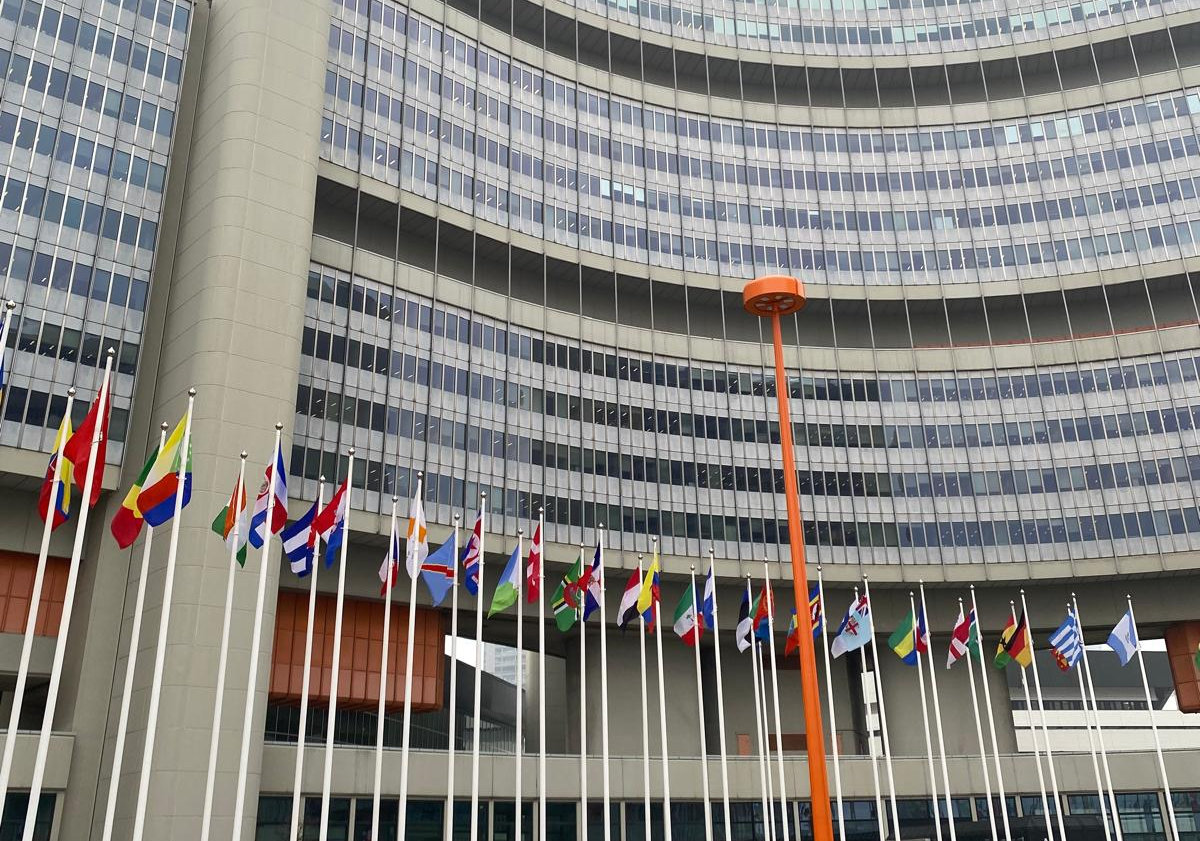
What can be found in the depths of the IAEA Archives in Vienna?

A treasure of uncountable worth lays in Vienna (Austria): the archives of IAEA. It documents the history of IAEA and its activities in promoting the use of peaceful uses of nuclear technology and safeguarding against diversion of nuclear materials. Apart from these fundamental responsibilities, the archives are essential for research on nuclear verification.

Continue ReadingWhat can be found in the depths of the IAEA Archives in Vienna?
Read more about the article Tritium’s Challenge to Disarmament Irreversibility
Abstract Representation of Tritium's Role in Nuclear Verification and Disarmament. AI-generated image (using NightCafe’s HiDream I1 Fast)

Tritium’s Challenge to Disarmament Irreversibility

By MD Arifur Rahman. Tritium is a radioactive material with a half-life span of just 12.3 years, which is usually used as a boosting element in nuclear weapons, allowing relatively smaller bombs to release more than 10,000 tons of TNT energy without requiring a full thermonuclear weapon. Tritium quickly breaks down, so countries with nuclear arsenal sustain the production to maintain their arsenals. Meanwhile, tritium also uses in civilian fusion research, make it difficult to monitor due to the fact that it can serve both peaceful and military purpose, creating challenges for global disarmament effort.

Continue ReadingTritium’s Challenge to Disarmament Irreversibility
Read more about the article When Prestige Overrides Proof: How Mistrust Undermines Nuclear Verification in South Asia
Abstract Representation of Verification in Nuclear Politics. AI-generated image (using NightCafe’s HiDream I1 Fast)

When Prestige Overrides Proof: How Mistrust Undermines Nuclear Verification in South Asia

By Kashaf Sohail. When we talk about “verification” in nuclear politics, most people picture inspectors counting warheads, satellites tracking fissile materials, or monitoring treaty compliance. But verification is more than a technical checklist. At its core, it builds the shared knowledge required for stability, allowing adversaries to avoid miscalculation. This broader meaning of verification is something I came to see personally. As a woman from South Asia in the nuclear policy space, I have noticed how the language of deterrence often echoes masculinity: resolve, retaliation, rank. That mindset prizes control and prestige, not accountability. Thus, it leaves little room for transparency or openness because secrecy itself is seen as strength. When that is the starting point, verification looks less like a safeguard and more like a foreign intrusion.

Continue ReadingWhen Prestige Overrides Proof: How Mistrust Undermines Nuclear Verification in South Asia
Read more about the article Nuclear Verification in the South American Cone: the case of ABACC.
Abstract Representation of ABACC's Efforts on Verification. AI generated image (using NightCafe’s HiDream I1 Fast)

Nuclear Verification in the South American Cone: the case of ABACC.

By Natalia Luers. ABACC, the Brazilian-Argentine Agency for Accounting and Control of Nuclear Materials, was created after Argentina and Brazil shifted from nuclear rivalry to cooperation, turning their foreign-policy convergence into a verification-based mechanism that reinforced Latin America's peace. In 1991, after both countries returned to democracy after the end of military rule, they formalised their cooperation through ABACC to ensure the international community and each other that all nuclear material and facilities in their territories would only be used for peaceful purposes. United in their opposition to the NPT, viewed as the epitome of unfairness and injustice in the global nuclear order, a system of double standards restricting NNWS access to nuclear technology, they recognised the strategic opportunity to build mutual trust in their nuclear programmes and later integrate into the global system as one front.

Continue ReadingNuclear Verification in the South American Cone: the case of ABACC.
Read more about the article Passing Through or Power Play? The Verification Gap in the Space–Nuclear Nexus
Abstract Representation of Verification in Space. AI generated image (using NightCafe’s HiDream I1 Fast)

Passing Through or Power Play? The Verification Gap in the Space–Nuclear Nexus

By Raoul Cardellini Leipertz. Last spring, a lone Russian satellite drifting through an unexpected low Earth orbit set off alarms from Washington to Brussels. Was it an innocuous on-orbit experiment or the first sign of an exo-atmospheric strike platform? Although officials later softened the most sensational claims, the incident exposed a deeper and far more persistent concern. Space law may prohibit nuclear weapons in orbit, but it provides no means of verifying whether that rule is being respected.

Continue ReadingPassing Through or Power Play? The Verification Gap in the Space–Nuclear Nexus

Disarmament dividend

Disarmament dividend by Robin E. Möser, published in The New InternationalistDecember 2025What can be learned from South Africa, the first and only case where a nuclear arsenal has been developed…

Continue ReadingDisarmament dividend